The Ultimate Guide to Negotiating Domain Deals Like a Pro

Here’s what nobody tells founders about buying a serious domain: the price is not “the price.”
The same domain can sell for $18,000 in one conversation and $180,000 in another. The letters and extension doesn’t change, but the seller’s outlook on what they believe they can get for the domain can change from deal to deal, depending on who they are negotiating with (and, really, what their true motivation is). One buyer shows up neutral and patient, and another leaks urgency, mentions funding, and signals inevitability. As you can imagine, the seller adjusts his or her outlook on the deal accordingly.
Domain pricing lives inside a band, and your behavior determines where inside that band the deal lands. In negotiation-nerd speak, this is known as the ZOPA (Zone of Potential Agreement).
Professional domain buyers understand this instinctively, and they separate structural value from emotional value. They decide their ceiling before the first email leaves their outbox, and they let the other side anchor whenever possible, so that they can close on domains as quickly as possible with as little drama as possible.
This guide breaks down how domain deals actually unfold in the real world, how to value a name rigorously before entering negotiation, how to manage psychology across multiple rounds, and how to close without either overpaying or blowing up the deal.
The Short Version, Before We Go Deep
If you want the condensed operating system before we unpack everything:
- Separate inherent value from emotional value before reaching out.
- Decide your maximum price in advance and write it down.
- Keep early outreach neutral so you don’t inflate the anchor.
- Let the seller name the first number, whenever possible.
- Use comparable sales to narrow the band, not to win arguments.
- Treat concessions as trades, not discounts.
- Stop negotiating when the remaining gap is smaller than the long-term leverage the domain creates. IE: don’t get too cute.
Everything below expands these principles.
Why Domain Prices Swing So Widely
From the outside, domain pricing can feel chaotic and completely opaque. A clean two-word .com trades for $9,000, and a different one that is similar trades for $65,000. A single-word name moves for six figures, while another sits unsold for years. But, there’s structure beneath that noise.
Domain value is shaped by two layers: inherent value and contextual leverage. Inherent value defines the range a domain plausibly belongs in. Contextual leverage determines where inside that range the deal settles.
Understanding that distinction changes how you negotiate.
Inherent Value: The Baseline
Some variables are foundational and difficult to argue away.
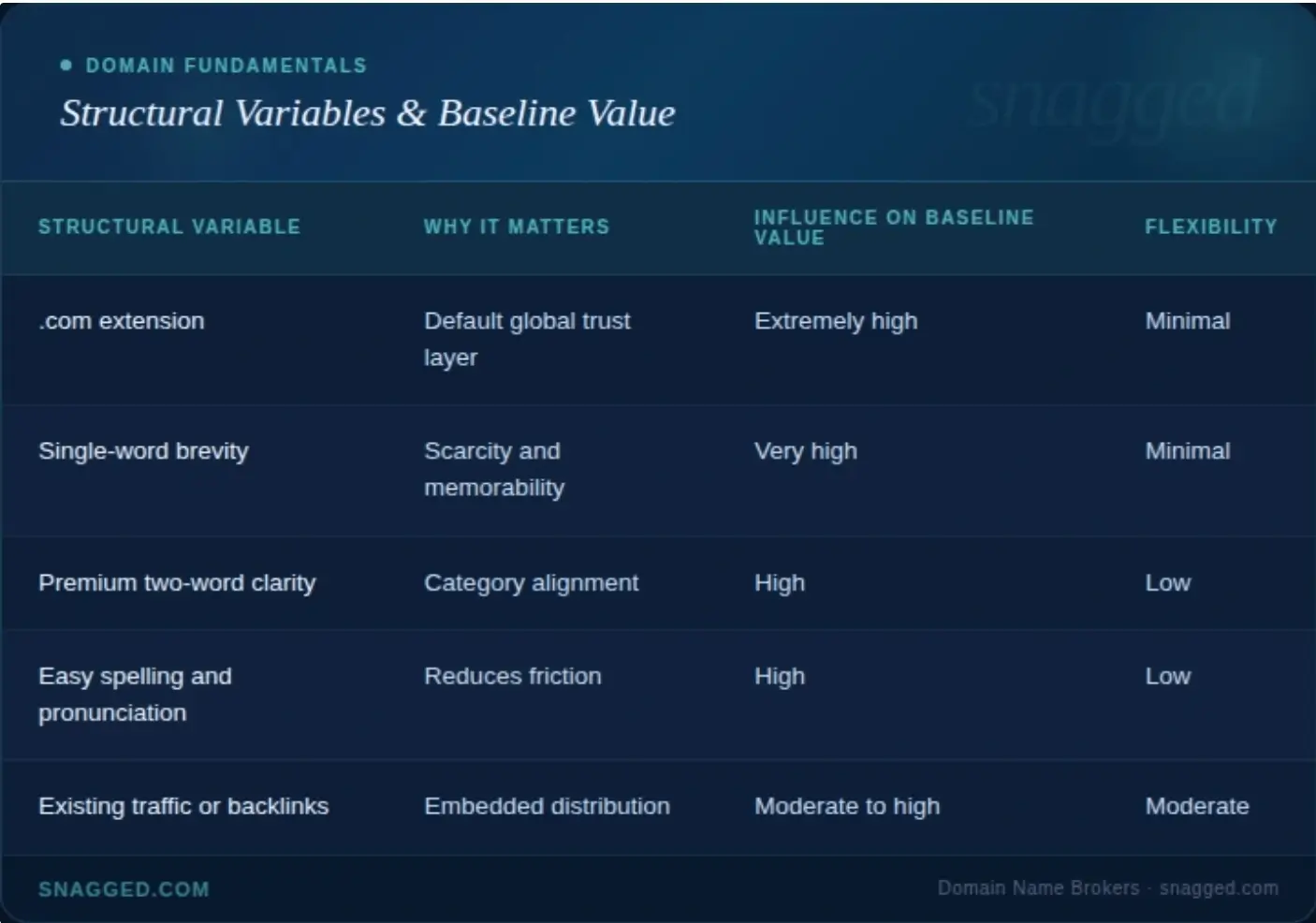
A short, commercially relevant .com exists in a different structural tier than a longer niche extension. That tier creates the outer boundaries of negotiation, but this alone doesn’t determine price.
Contextual Leverage: The Real Swing Factor
Inside the structural band, psychology takes over.
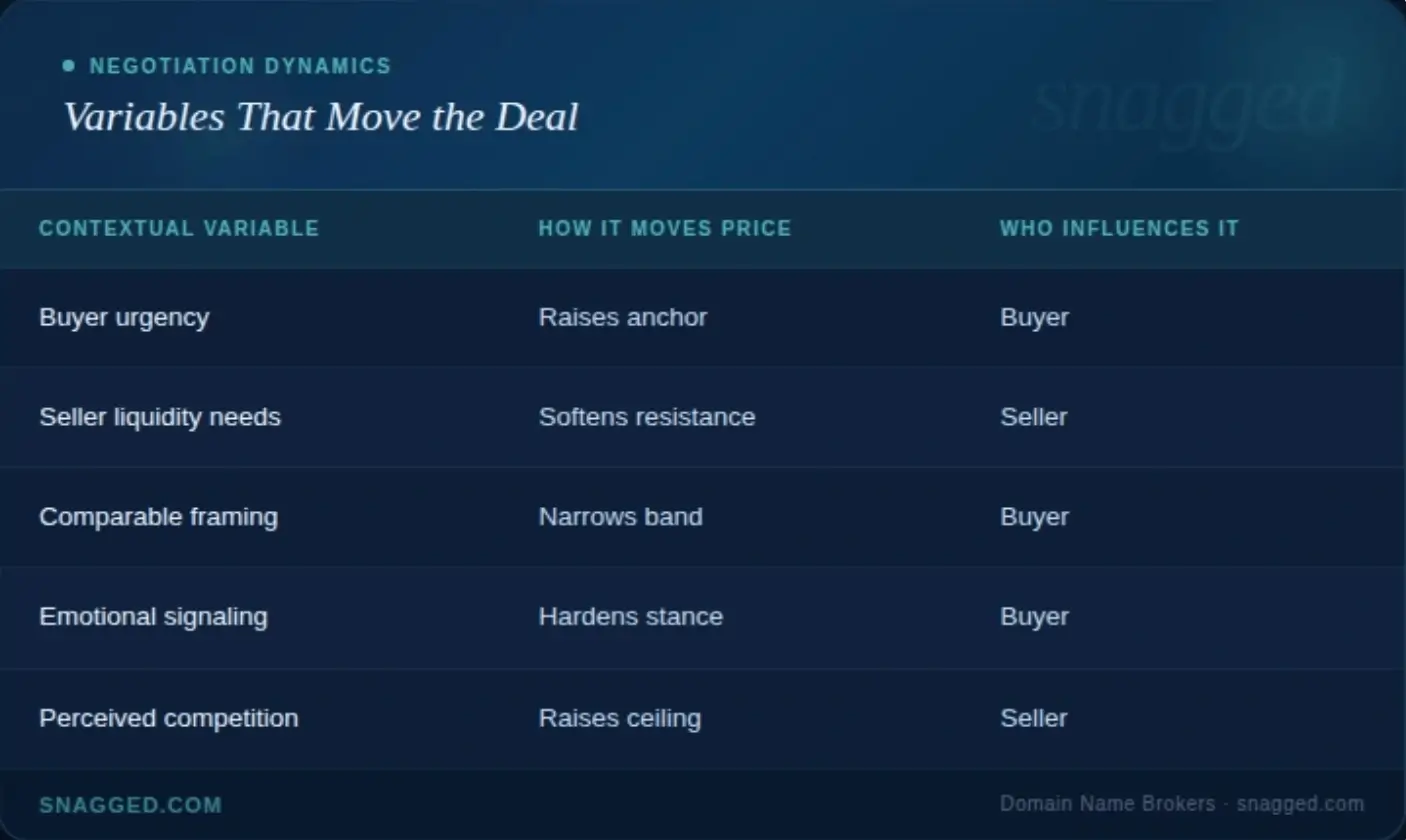
Most founders obsess over structural value and ignore contextual positioning. That imbalance is where overpayment happens.
The First Negotiation Happens Before You Mention Money
When a domain owner receives an inquiry, they immediately begin profiling the buyer.
Are they funded? Is the transaction urgent? Do they have a credible brand with a large following?
Every detail in your outreach contributes to that profile.
An email from founder@yourstartup.com signals commitment and institutional backing. Mentioning a recent raise signals purchasing capacity. Referencing a product launch timeline signals urgency. Describing the name as perfect for your vision signals brand and emotional lock-in.
All of those signals increase the seller’s confidence that you will stretch. A neutral message does something powerful precisely because it avoids those signals:
“Hi, I’m reaching out regarding [Domain].com. Would you consider selling it? If so, do you have a price in mind?”
This isn’t a pitch and there isn’t any context or backstory for the seller to dig into. Also, this reinforces the importance of working with a broker who can help to navigate (and mitigate) these type of conversations, without sellers anchoring on who the client might be.
To make the leverage mechanics explicit:
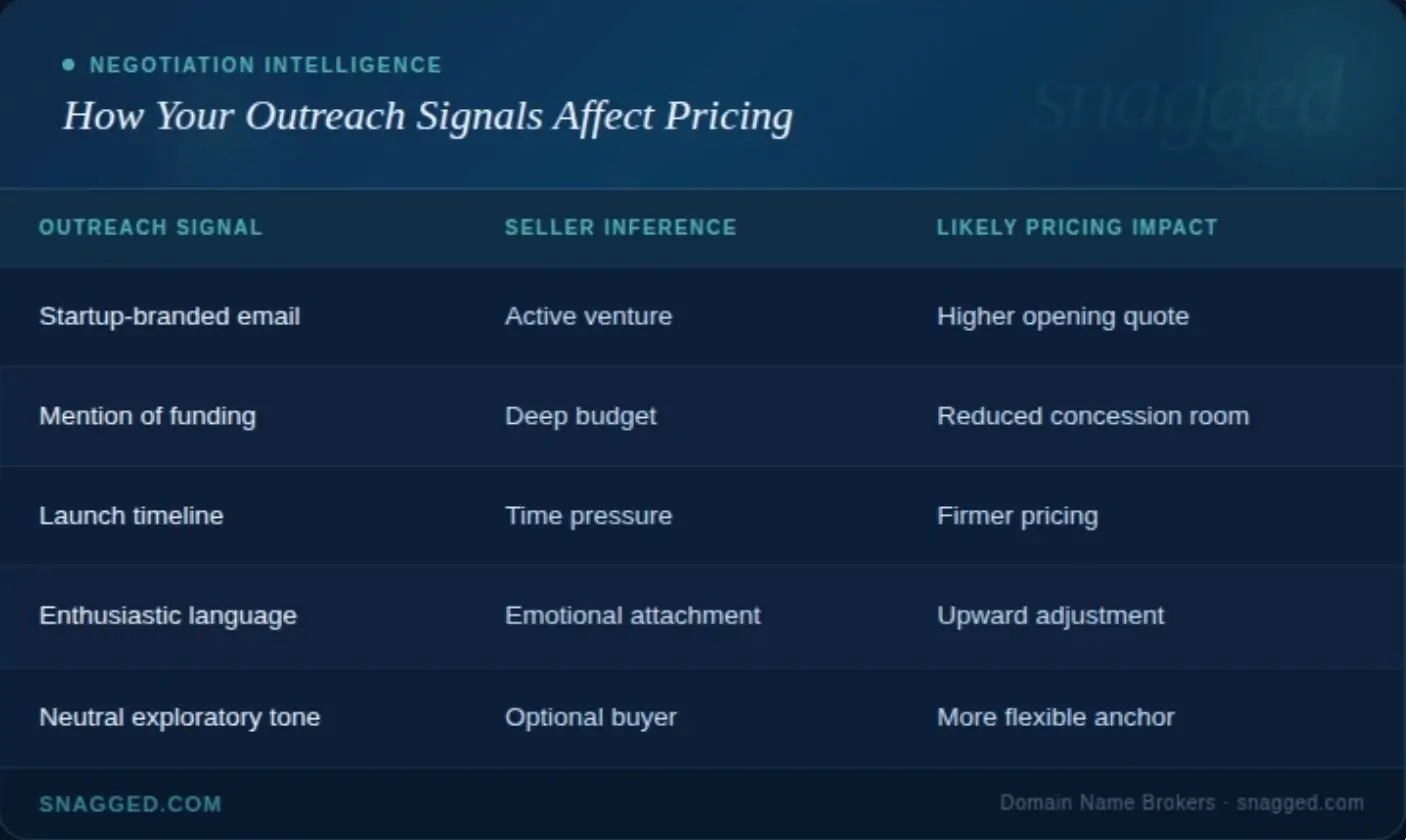
Just remember…early disclosure is a one-way door. It can’t really be “undone” once you’ve provided context and too much information to a seller, which “may” lead them to anchor high on the price they want for a domain.
Anchoring: Whoever Sets the Frame Shapes the Deal
In opaque markets, the first credible number carries disproportionate weight.
If you open at $30,000, the domain now lives in that orbit. Even if the seller counters higher, the psychological floor has moved upward. If the seller instead opens at $12,000, the entire negotiation begins in a different band.
Granted, if you offered $30,000 on a domain that’s probably a 7-figure name, your anchor doesn’t really matter. Your opening offer needs to at least show you understand the game. An offer like that is going to be considered a lowball and will kick off the negotiation on the wrong foot - you might not even get a reply.
If possible, letting the seller anchor first often creates an advantage because many owners lack formal valuation frameworks. Some reference past inquiries. Some pick round numbers that feel significant. Some simply test the market.
When you must go first, discipline matters.
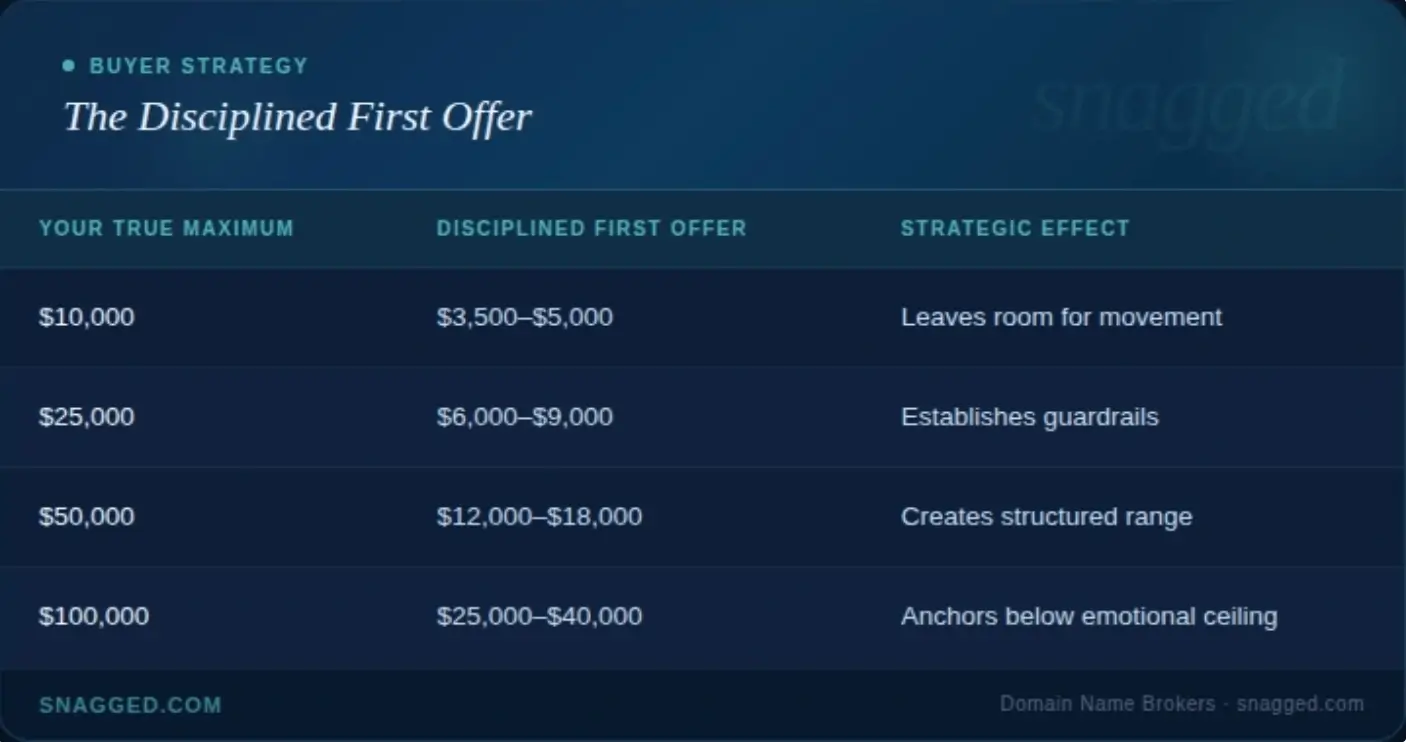
Anchoring from imagined future upside collapses leverage. Anchoring from present strategic value preserves it.
How to Value a Domain Before You Negotiate
Walking into negotiation without a defined ceiling is how small gaps turn into expensive mistakes.
A disciplined valuation process has four layers: structural assessment, comparable sales, strategic modeling, and replaceability risk.
1. Inherent Value Assessment
Evaluate the domain independently of your company.
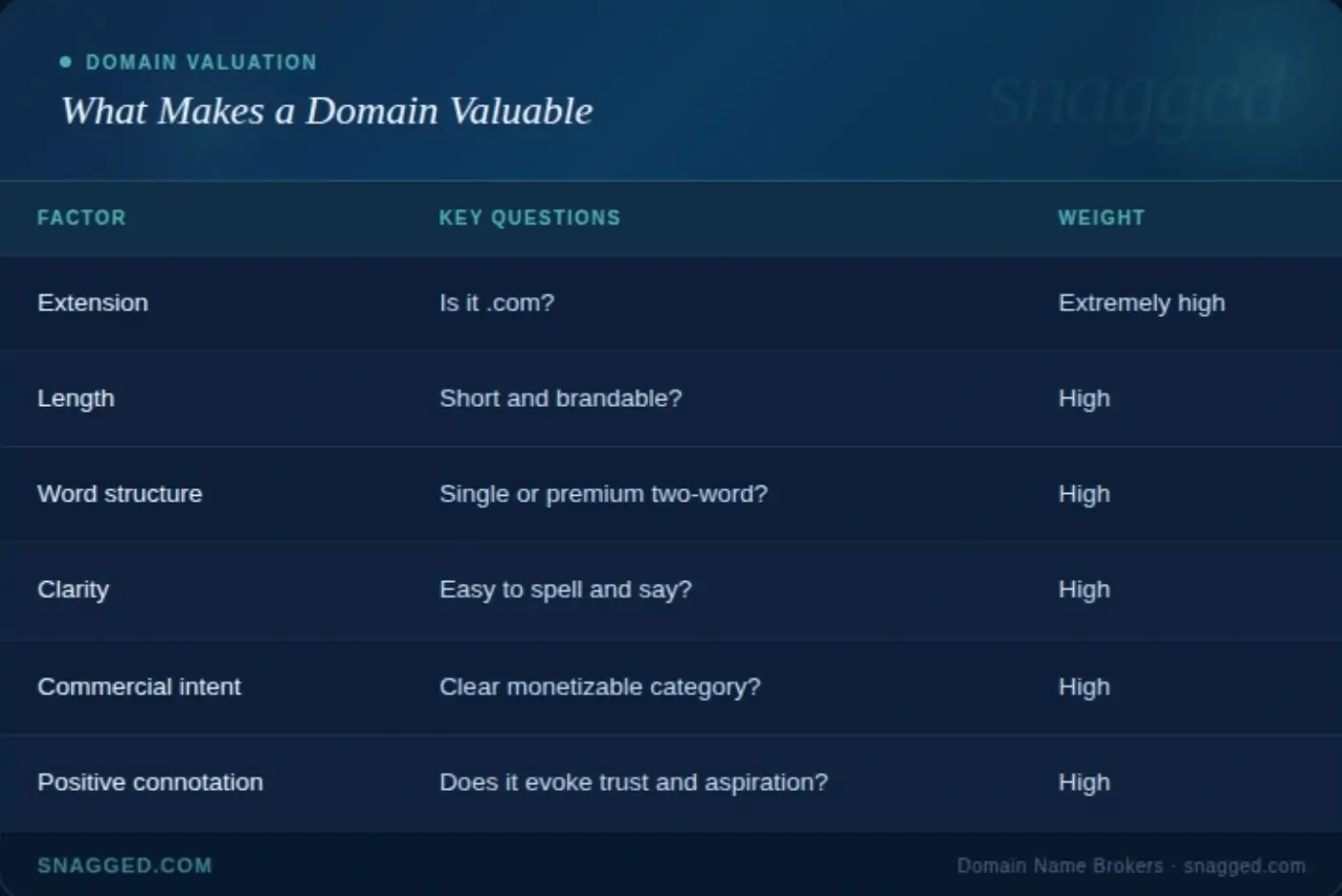
This establishes the structural tier.
2. Comparable Sales
Comparable transactions provide market grounding. Below is a table (with fictional data) which you can use to track domains and comparable assets when preparing for a negotiation.
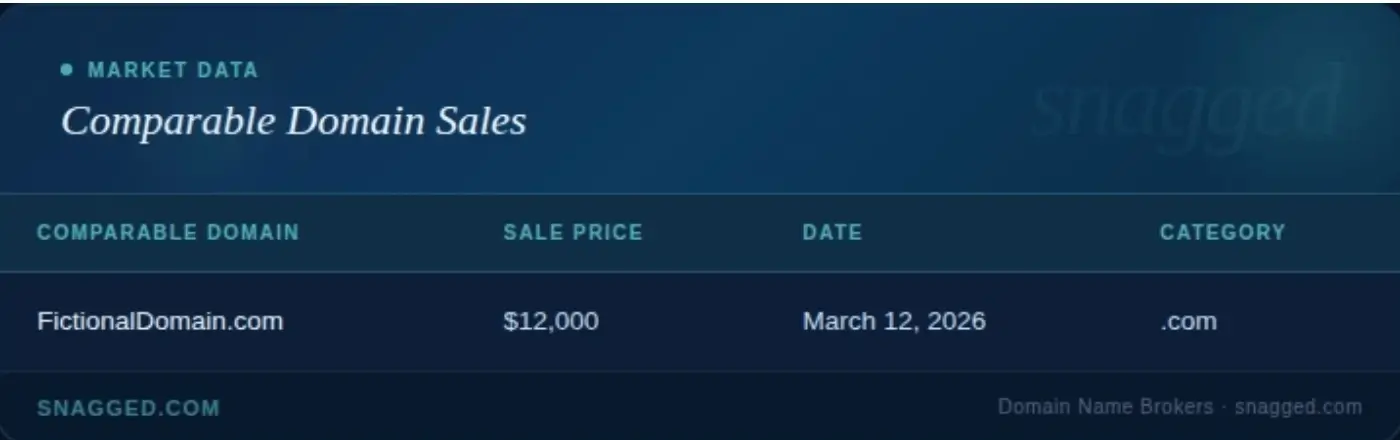
Look for patterns in extension, word count, and vertical. Use comps to define a rational band, not to win arguments. And while comparable sales are helpful as input, they don’t always affect the seller’s stance. As we have to remind clients all the time, sellers are under no obligation to sell at any price, comps or not. That’s what makes these negotiations difficult, especially when the cost to hold these assets is negligible.
3. Strategic Impact Modeling
Now estimate the potential impact that the domain will have across a number of variables, and model it out dynamically in Google Sheets (or Excel). With proper inputs and outputs, you’ll be able to understand the potential economic impact of purchasing and migrating to a new domain.
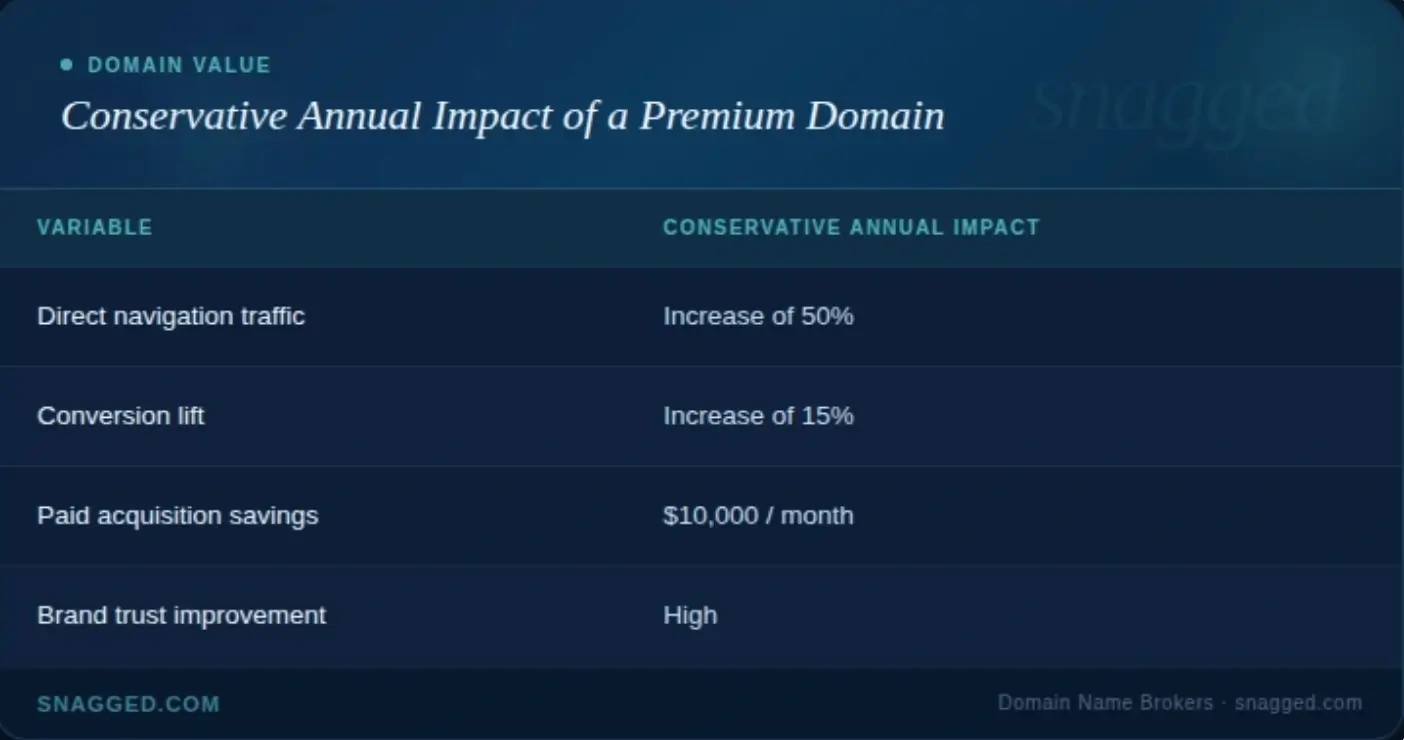
Even imperfect modeling forces clarity. If the domain plausibly improves efficiency by $40,000 per year, stretching an additional $8,000 upfront becomes rational. And while this is again a helpful input to your negotiation strategy, very rarely is a pure ROI calculation going to win you an amazing price in a negotiation. Nor is it often going to substantiate a massive spend. Again, these are all inputs to how you think about the value, not the overall determining factor, which is a blend of art, science and upside.
4. Replaceability
List credible domain alternatives and honestly evaluate their weaknesses.
If substitutes are strong and realistic, the buyer may show more flexibility on price. If substitutes are weak, stretching your price ceiling may be justified in order to get the deal done. But again, remember that just because alternatives may exist, the owner is under no obligation to sell at a price that you deem fair or reasonable. These deals only happen if the upper bound of the buyer's range intersects with the lower bound of the seller's.
Seller Archetypes
Different sellers require different approaches.
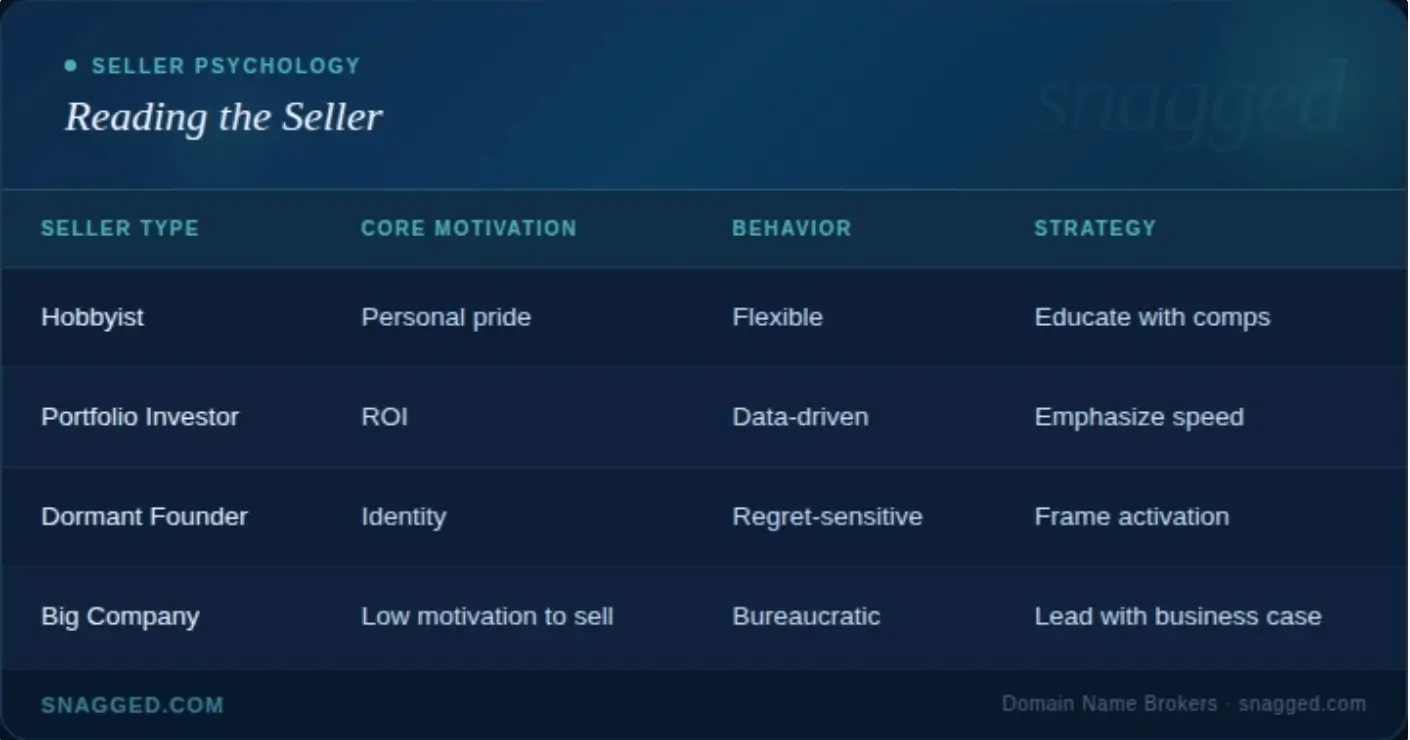
Matching tone to motivation often moves deals faster than incremental price increases.
Concessions Are Trades
Unilateral discounting signals weakness. Conditional concessions tighten the path to closing.
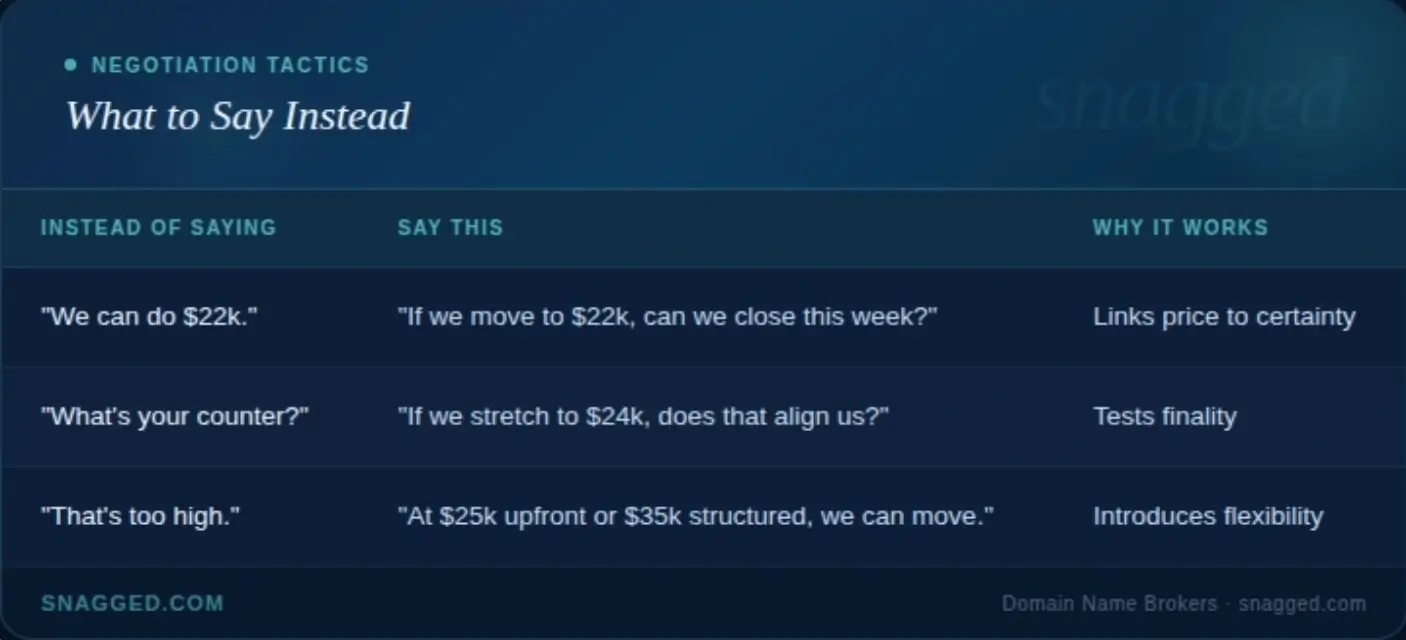
Each movement should extract something tangible in return. A best practice in any negotiation, domain name or otherwise, is to pair concessions with asks. IE: “If I can come up to $200K, can we do this on a payment plan?”
A Real Negotiation in Motion
- A seller asks $40,000, and your ceiling is $25,000.
- You open at $15,000 with comp grounding and immediate escrow.
- The seller counters at $32,000, and you move to $22,000 tied to a same-week close.
- The seller returns at $28,000, and the remaining gap is $3,000.
- You respond calmly: “If $25,000 works, we can finalize immediately.”
- Many deals close here because certainty outweighs marginal upside.
The Real Skill: Emotional Neutrality
Most domain negotiations fall apart because the buyer loses composure, or lacks patience to continue negotiating. Again, this all depends on the type of seller that you’re dealing with and what their true motivations are. Domain Investors will be much more calculated based on the ROI they want to generate from a domain sale. Mom & Pop, (OG domain holders), are often driven by emotion and less rational decisions. They are equally as likely to (arbitrarily) double the value that they want to sell the domain for in the middle of a negotiation, as they are to call the deal off altogether.
So, in the end, it truly depends on who you are negotiating with to understand how to get the deal done efficiently. Regardless of who the seller is, remaining calm, neutral, understanding, and patient will almost always be a nhelpful tool to get the deal finalized over the line…it might just take some awile. We’ve had deals we’ve closed after 3+ years. And some that are still ongoing 8+ years into the discussions!
The strongest negotiators recognize that they need to slow down and that they might revisit their original ceiling. They ask whether the current number still fits inside the valuation framework defined before emotion entered the room. They remind themselves that the seller’s confidence and price expectations rise the moment it feels like they need the name, regardless of price.
In private markets, the most powerful position you can hold is the ability to walk away from a domain deal when it doesn’t feel right, or has breached your price ceiling. But it’s important to remain focused on what the domain is and why you want it. Premium domains on premium TLDs are N of 1 assets, so they don’t come around every day. And, if someone else scoops the domain you have your eye on (especially when it’s tied to a brand you’ve already built), complexity only increases in being able to acquire that domain (if at all) in the future.
If you have a domain you’re trying to secure and need help in negotiations, reach out…we’ve got you.
Share this post: