StumbleUpon and the Internet Before Algorithms
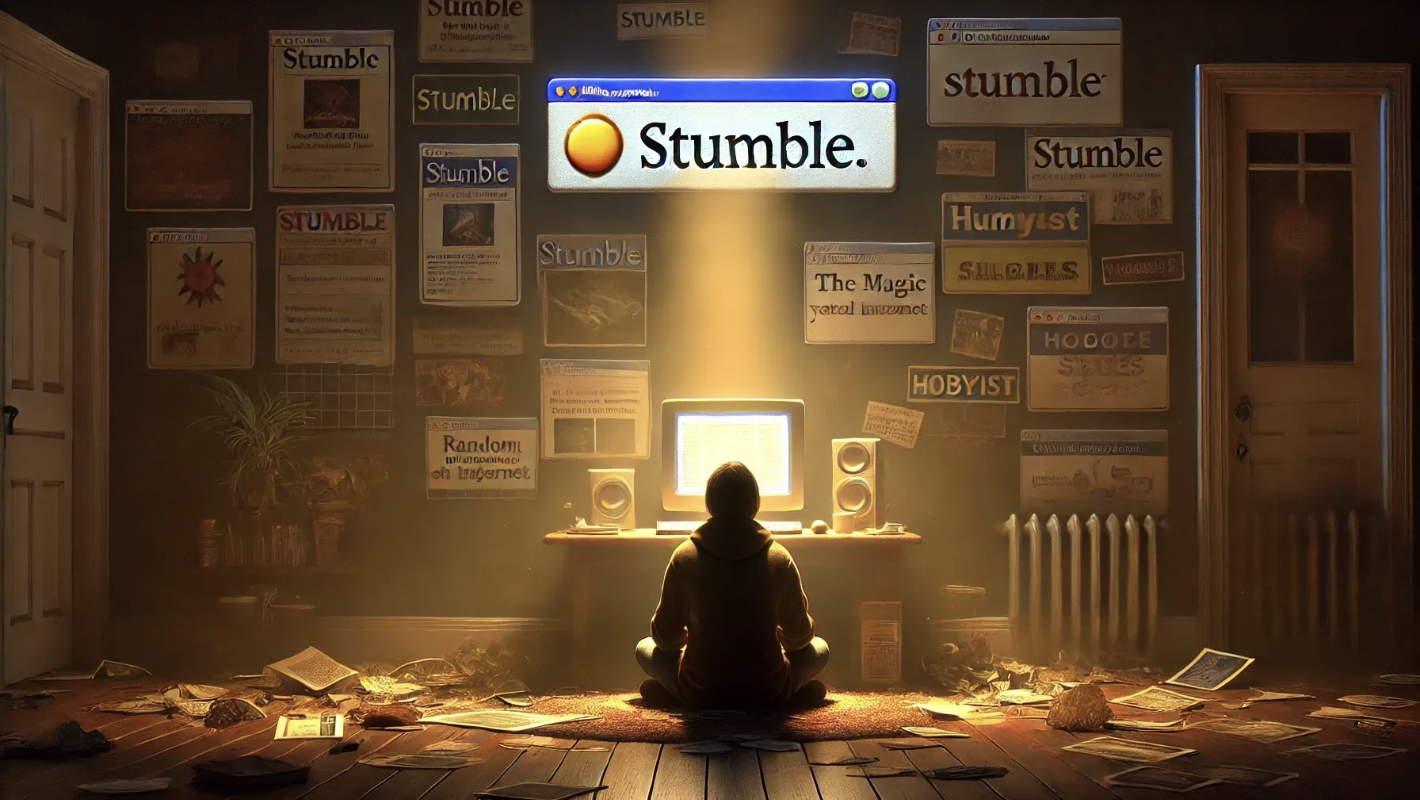
How a random button trained a generation to explore the web
There was a moment, usually late at night, when the internet felt impossibly large. You would sit in front of a glowing screen, open your browser, and click a button that made no promises at all. There weren’t headlines, trending topics or personalized feeds waiting to affirm what you already believed or liked. There was just a single word and the quiet thrill of not knowing where you were about to land.
That button said “Stumble.”
Before algorithms learned how to predict us, StumbleUpon taught an entire generation how to wander. It did not ask what you wanted. It asked only whether you were curious enough to see what someone else thought was worth your time. And in doing so, it shaped how millions of people learned to explore the web, long before discovery became optimized, monetized, and engineered for engagement.
The Internet Before It Was Tamed
To understand why StumbleUpon mattered, you have to remember what the web felt like before feeds took over. This was an era when personal blogs were everywhere, when websites felt handmade, and when discovery required curated effort rather than automation. The internet was not something that arrived neatly packaged in a scroll. It was something you tripped over, bookmarked, and sometimes forgot entirely.
Back then, there was no dominant front page of the internet. Google helped you find answers, but it did not help you find wonder. If you wanted something interesting, you had to know where to look, or hope you got lucky.
StumbleUpon existed in that gap.

A Simple Idea With an Unusual Philosophy
Founded in the early 2000s by Garrett Camp (who later went on to found Uber) and Geoff Smith, StumbleUpon was built around a deceptively simple idea. Instead of searching for content, users could rate websites they liked, organize them into categories, and then let the system serve up random pages curated by other people who shared similar interests.
The key word there is people.
StumbleUpon was trying to surface taste. The sites you saw were not popular because they performed well on a dashboard. They were popular because enough curious humans thought they were worth a thumbs-up. When you clicked the button, you were stepping into a stream shaped by collective curiosity rather than individual optimization.
That distinction mattered more than anyone realized at the time.

Training Taste Instead of Reinforcing It
Modern discovery systems are excellent at reinforcement. They learn what you like and give you more of it, refining your feed until it feels frictionless and familiar. StumbleUpon did the opposite. It showed you things adjacent to your interests, not identical to them. It encouraged exploration over confirmation.
You might stumble onto a strange data visualization, a personal essay written by someone you had never heard of, or a tiny website dedicated to an obscure hobby you did not know existed. Some pages were brilliant. Some were forgettable. That unpredictability was the point.
Over time, users developed a broader sense of what the internet could be. StumbleUpon did not just deliver content. It trained people how to recognize quality, novelty, and craft in places they would never have intentionally searched for.
In hindsight, it was a taste-making machine disguised as a toy.

The Quiet Power It Gave Creators
For creators, StumbleUpon was both mysterious and transformative. Bloggers and designers would wake up to sudden traffic spikes without knowing why. A post that had sat unnoticed for months might suddenly find an audience, simply because it resonated with the right person at the right time.
Unlike search traffic, which rewards clarity and intent, StumbleUpon traffic rewarded surprise. The web’s weirdest corners thrived because they were interesting, not because they were optimized. Entire ecosystems of niche sites survived and grew because discovery did not require scale.
That kind of exposure is rare now, and it’s not because creators stopped making interesting things.
When the Web Started to Narrow
As social platforms grew, the internet began to change shape. Feeds replaced bookmarks. Algorithms replaced wandering. Discovery became something that happened to you, rather than something you actively participated in.
StumbleUpon was acquired by eBay (which is kind of a weird acquisition target, if you ask us), and while the acquisition brought attention, it also marked the beginning of a slow mismatch between the platform’s philosophy and the direction of the broader internet. Optimization became unavoidable. Growth expectations changed. Competing for attention in a feed-driven world meant playing a very different game.
Eventually, StumbleUpon faded, relaunched as Mix, and quietly disappeared. There was no dramatic collapse. Just a sense that the web had moved on.

What We Lost Without Randomness
When StumbleUpon went away, something subtle disappeared with it. The idea that discovery could be inefficient. The belief that value could be found in the unexpected. The patience required to sit through a few mediocre pages in order to find something extraordinary.
The modern web is extraordinarily good at giving us what we already want. It is far less interested in showing us what we did not know to ask for.
That shift has consequences. It narrows creativity. It compresses taste. It rewards sameness because sameness performs well. It makes you feel like your point of view is almost universal. There is less friction and dissonance, which creates more of a chance for self-reflection. And while algorithms are not inherently bad, their dominance has left very little room for serendipity.
What Founders and Builders Can Still Learn From StumbleUpon
For founders building platforms today, StumbleUpon offers a quiet lesson that is easy to miss. Discovery does not always need to be efficient to be valuable. Sometimes the magic lives in friction, in surprise, in allowing users to feel like they are exploring rather than consuming.
The same lesson applies to naming, branding, and domains. The most memorable names often feel discovered rather than engineered. They invite curiosity. They linger. They feel like places you want to visit, not just URLs you tolerate.
For domain nerds especially, StumbleUpon is a reminder of why the early web felt alive. It was built by people who cared about interesting things, not just scalable ones.
The Button We Don’t Build Anymore
StumbleUpon didn’t fail because it was poorly designed. It faded because the internet chose a different set of values. Efficiency won, prediction won and, ultimately, infinite doom scrolling won.
But, the legacy of that random button still matters. It reminds us that the web once rewarded curiosity over certainty, exploration over optimization, and taste over performance metrics.
And for anyone building the next generation of platforms, products, or digital spaces, that might be the most important thing to remember.
Sometimes the best thing you can offer a user is not what they are looking for, but something they never would have thought to search for at all.
Share this post: