PostSecret.com: The Site People Mailed Their Deepest Secrets To

In 2004, a man named Frank Warren started handing out blank postcards to strangers on the street in Washington, D.C. There was nothing remarkable about them at first glance. There wasn’t any branding or real context beyond a single sentence printed on the front: Tell me a secret. It wasn’t framed like a campaign or a project with any clear outcome. If anything, it felt ambiguous, maybe even easy to ignore. Most people probably did. But a small number didn’t. They took the postcards home, held onto them longer than expected, and eventually sat down to write something they had never said out loud.
The First Secrets
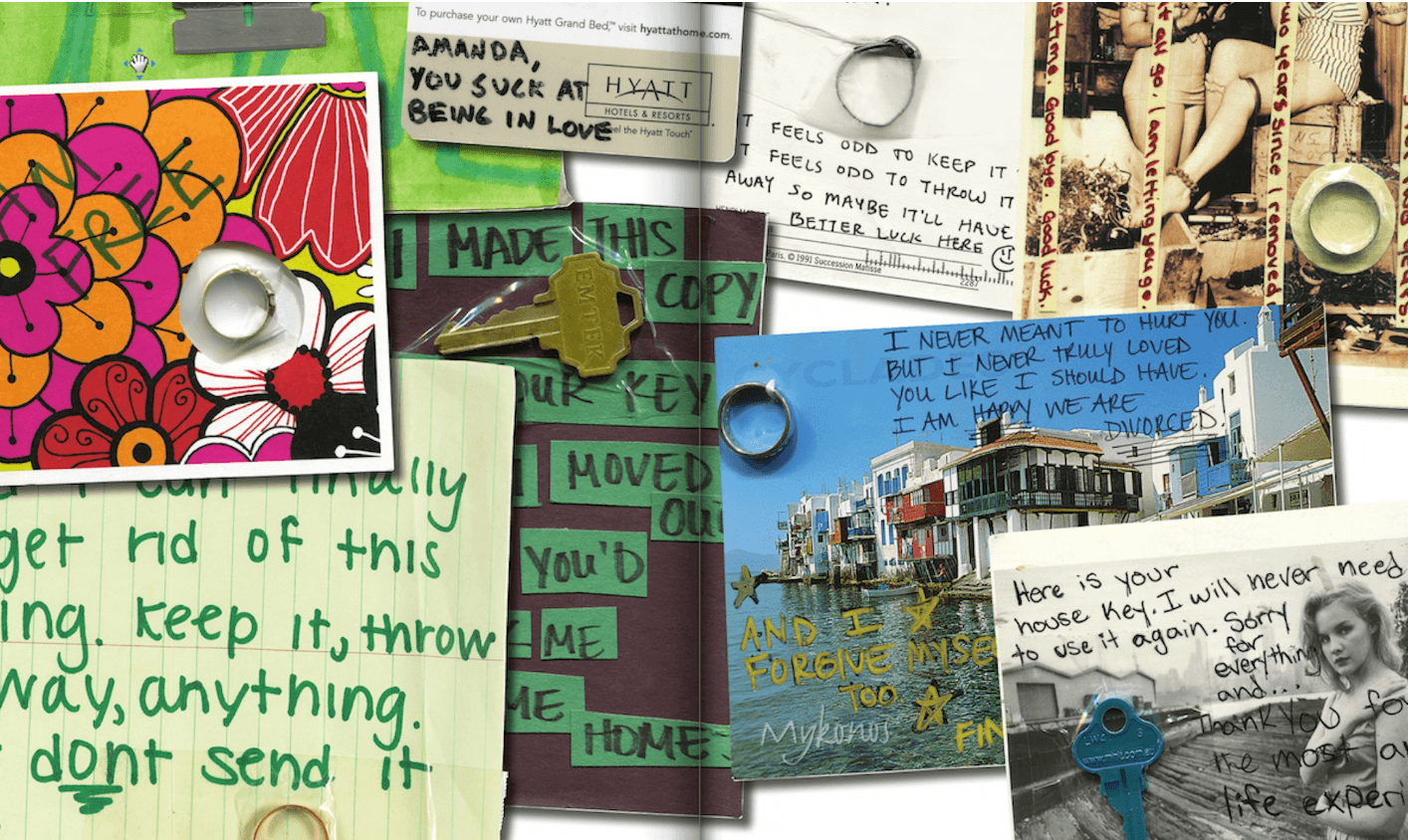
The postcards began arriving at Warren’s home address in small, uneven batches. At first, it was just a handful, easy to sort through in a single sitting. But even early on, the tone of what people were sending was unexpectedly personal. These weren’t clever responses to a prompt or performative confessions written for attention. They were quiet, specific, and often uncomfortable to read, the kind of thoughts that usually stay contained in someone’s head because there isn’t an obvious place to put them. Some were written quickly, almost like the sender didn’t want to overthink it. Others were carefully constructed, layered with images, cutouts, and handwritten lines that suggested the act of making the postcard was just as important as the secret itself.
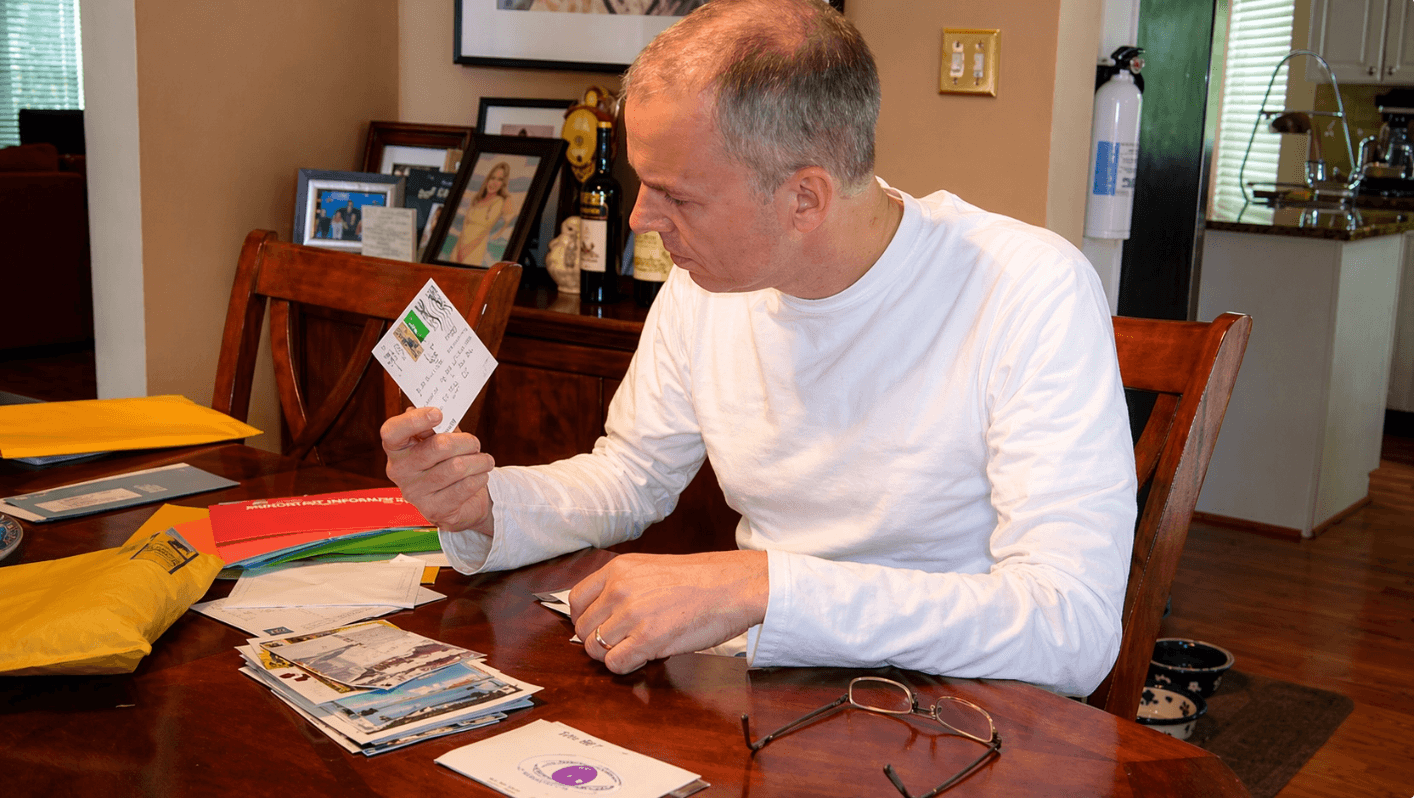
As more postcards arrived, the project began to take on a different weight. What had started as a loose, almost casual experiment was turning into a growing archive of anonymous honesty, collected one piece at a time from people Warren would never meet. There wasn’t a way for contributors to see each other, or for Warren to respond to them. The secrets existed in isolation, each one sealed in its own small rectangle. But taken together, they hinted at something larger, a pattern of shared fears, regrets, and contradictions that felt oddly consistent across completely different lives. At some point, the volume alone made it clear that this wasn’t going to stay a small, temporary project.
Putting It Online
In 2005, Warren made a simple decision that would change the trajectory of the entire thing. Instead of keeping the postcards private, he began scanning a selection of them and uploading the images to a basic blog. The site itself was minimal, almost stark, with no real design to speak of and no added commentary. Each post was just a collection of postcards, presented exactly as they had been sent. There weren’t any names attached to the individual secrets, and there wasn’t any way to trace anything back to a person or place. The site was just a window into what had already been happening quietly through the mail with PostSecret.
The blog didn’t explode overnight, at least not in the way modern internet stories tend to. There wasn’t a single viral moment that suddenly pushed it into the mainstream. Instead, it spread in a quieter, more deliberate way, passed from person to person, often privately. Someone would come across it and send the link to a friend with little explanation. “You should see this.” It wasn’t the kind of thing you blasted out broadly. It felt more like something you shared one-on-one, almost carefully, as if the content itself required a certain kind of respect and consideration.
A Weekly Ritual
But the effect compounded. More visitors meant more people encountering the project for the first time, and inevitably, some of them decided to participate. They would go back to the original idea, find a blank postcard, and send something in. The loop reinforced itself, not through any built-in mechanics, but through a kind of quiet curiosity. People wanted to see what others were willing to admit when there were no consequences, and once they saw it, many realized they had something of their own they could finally put somewhere.
By the mid-2000s, PostSecret had grown into one of the most widely read blogs on the internet. Millions of people were visiting the site, returning regularly to see the newest set of postcards. Warren had settled into a consistent cadence, posting a curated batch each Sunday. That rhythm became part of the experience. It wasn’t an endless stream of content, and it wasn’t trying to keep up with anything else online. The site updated when it updated, and when you reached the end of a post, there was nothing more to scroll. You closed the page and came back the following week.
What People Sent
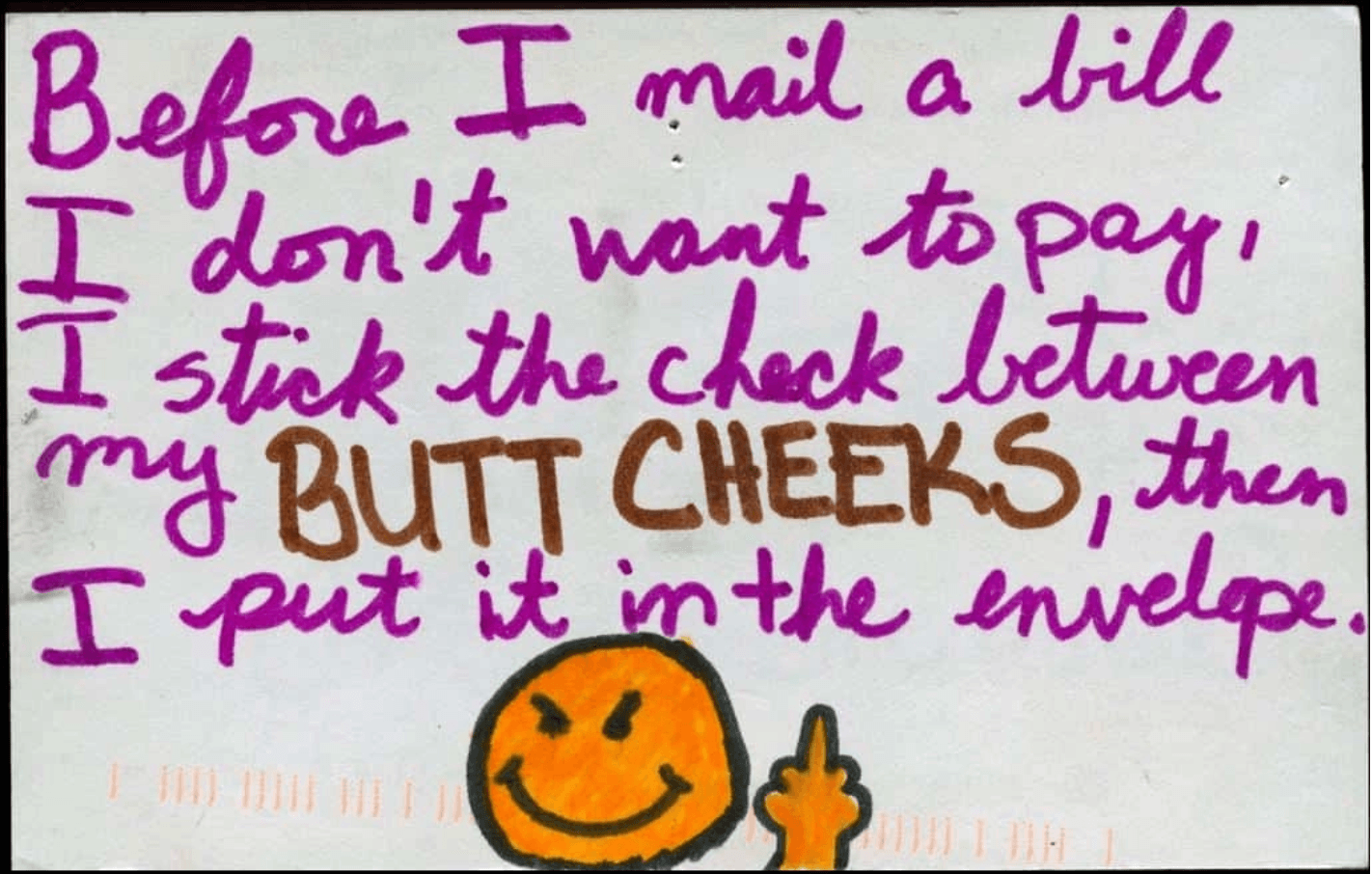
The postcards themselves continued to evolve. As more people became aware of the project, the submissions grew more varied, not just in what they said but in how they were made. Some were simple, just a sentence written across a blank surface. Others were intricate, layered with photographs, magazine clippings, paint, and handwritten notes that blurred the line between confession and art. But regardless of the format, the core of each one remained the same. It was a single thought, distilled down to something small enough to fit inside a few inches of space, and heavy enough to stay with the person who wrote it long after it was sent.
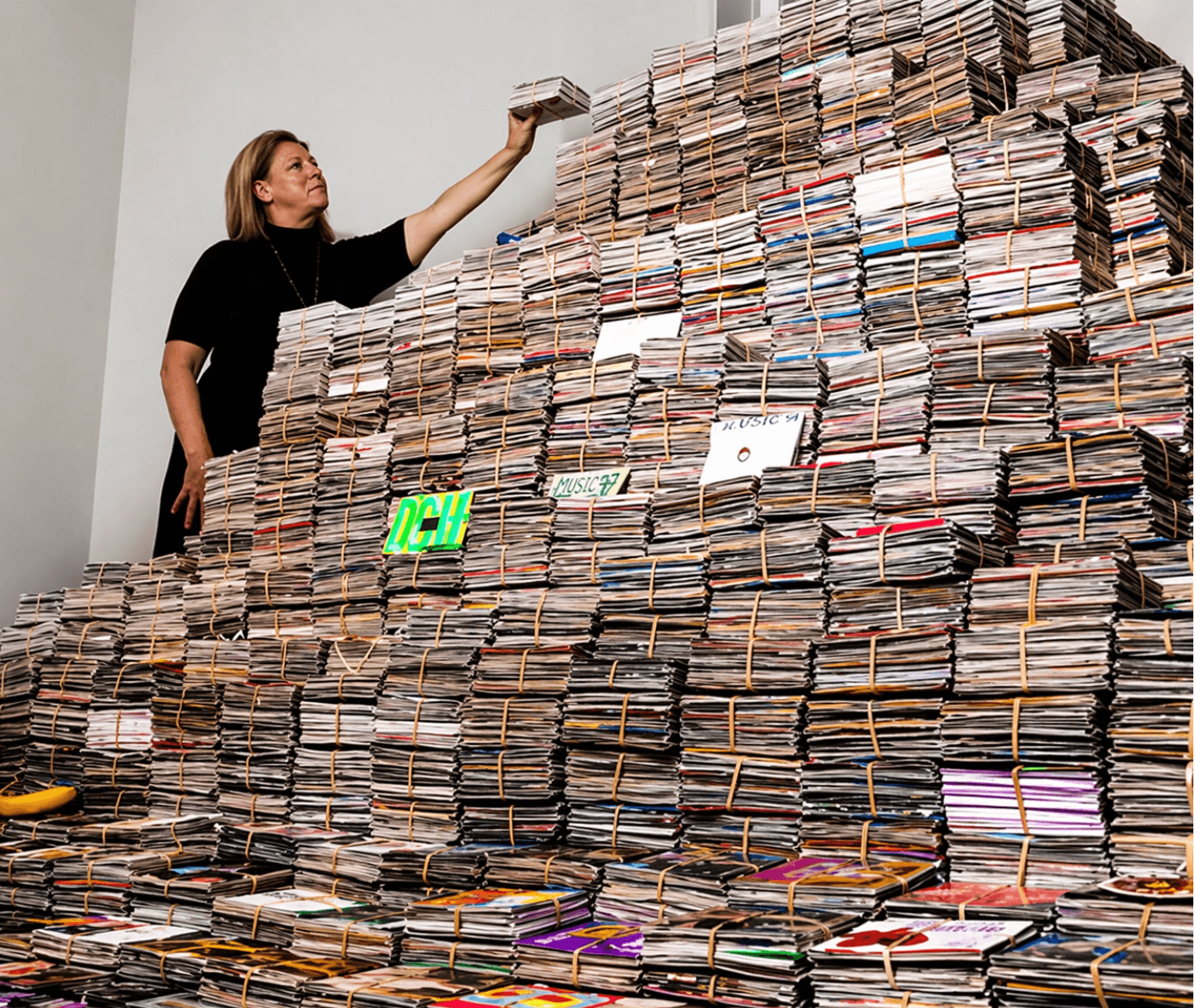
Over time, the scale became undeniable. What had started as a small mail art experiment in suburban Maryland grew into a project that received more than a million postcards over the years, each one carrying a secret from someone Warren would never meet. Not all of them were easy to read. As the volume increased, so did the range of what people were willing to share. Some postcards hinted at experiences that went far beyond private embarrassment or quiet regret. They spoke to isolation, to trauma, to moments where someone had clearly reached a point of not knowing where else to put what they were feeling. The project had started as a way to collect anonymous truths, but over time, it became clear that for some people, it was functioning as something more significant, a rare outlet in a space that didn’t ask for identity or explanation.
When It Got Heavy
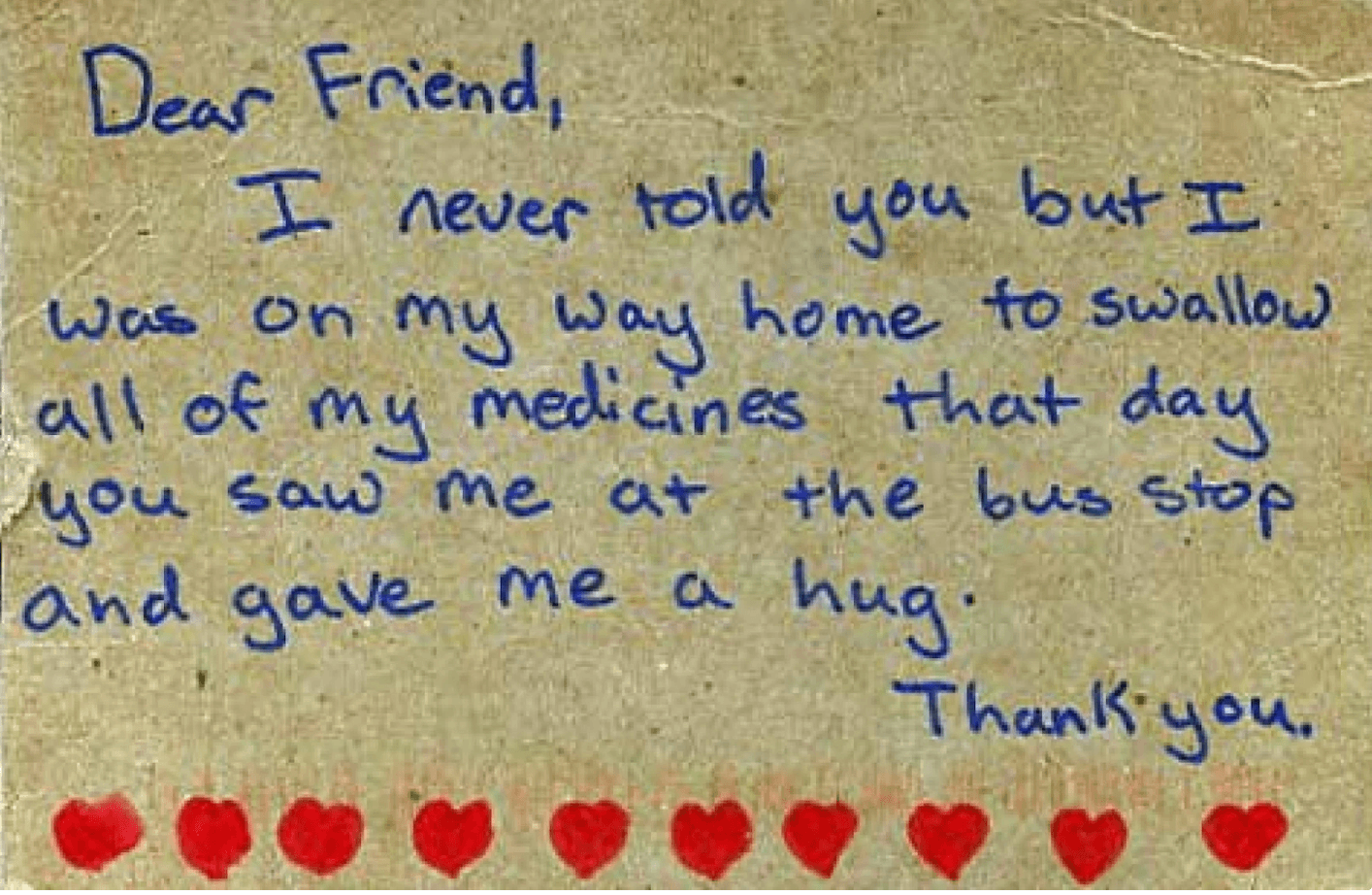
That shift brought a different kind of responsibility. Warren began including hotline numbers and mental health resources alongside the project, recognizing that while PostSecret could surface these experiences, it couldn’t resolve them. The simplicity that made the project so compelling also meant there were limits to what it could hold. A postcard could carry a secret, but it couldn’t carry what came after. Acknowledging that boundary became part of how the project continued without collapsing under its own weight.
Even as the broader internet changed, PostSecret remained largely the same. New platforms emerged, each one faster, more interactive, more optimized for engagement and scale. Anonymous posting became its own category, with entire apps built around the idea of sharing without identity. But most of those environments quickly took on a different tone, shaped by real-time feedback, visibility, and the dynamics that come with large, unfiltered networks. PostSecret, by contrast, stayed slow and controlled. The experience of the site remained almost exactly what it had been at the beginning: a small, curated set of secrets, presented without context, and left for the reader to sit with.
Beyond the Blog
Over time, the project extended beyond the website. Collections of postcards were published as books, which became bestsellers. Exhibits traveled to galleries and museums, displaying the physical artifacts that had once arrived quietly in the mail. A play, a TED talk, and live events followed, each one building on the same core idea while translating it into a different format. In some cases, individuals who had sent in secrets chose to share their stories more openly, turning something anonymous into something spoken, but that transition was always optional. The core of PostSecret never depended on it.

What remained constant was the original exchange. Somewhere, someone would decide to write something down that they had never told anyone. They would compress it into a few words, or build it into an image, or shape it into something that felt right to send. Then they would address it to a person they did not know, drop it in the mail, and let it go. On the other side, it would be received, opened, and, if chosen, shared with an audience that would never know where it came from.
Still Listening
Years later, the site is still active, still posting, still receiving new postcards. The scale of the internet around it has changed dramatically, but the structure of PostSecret has not.
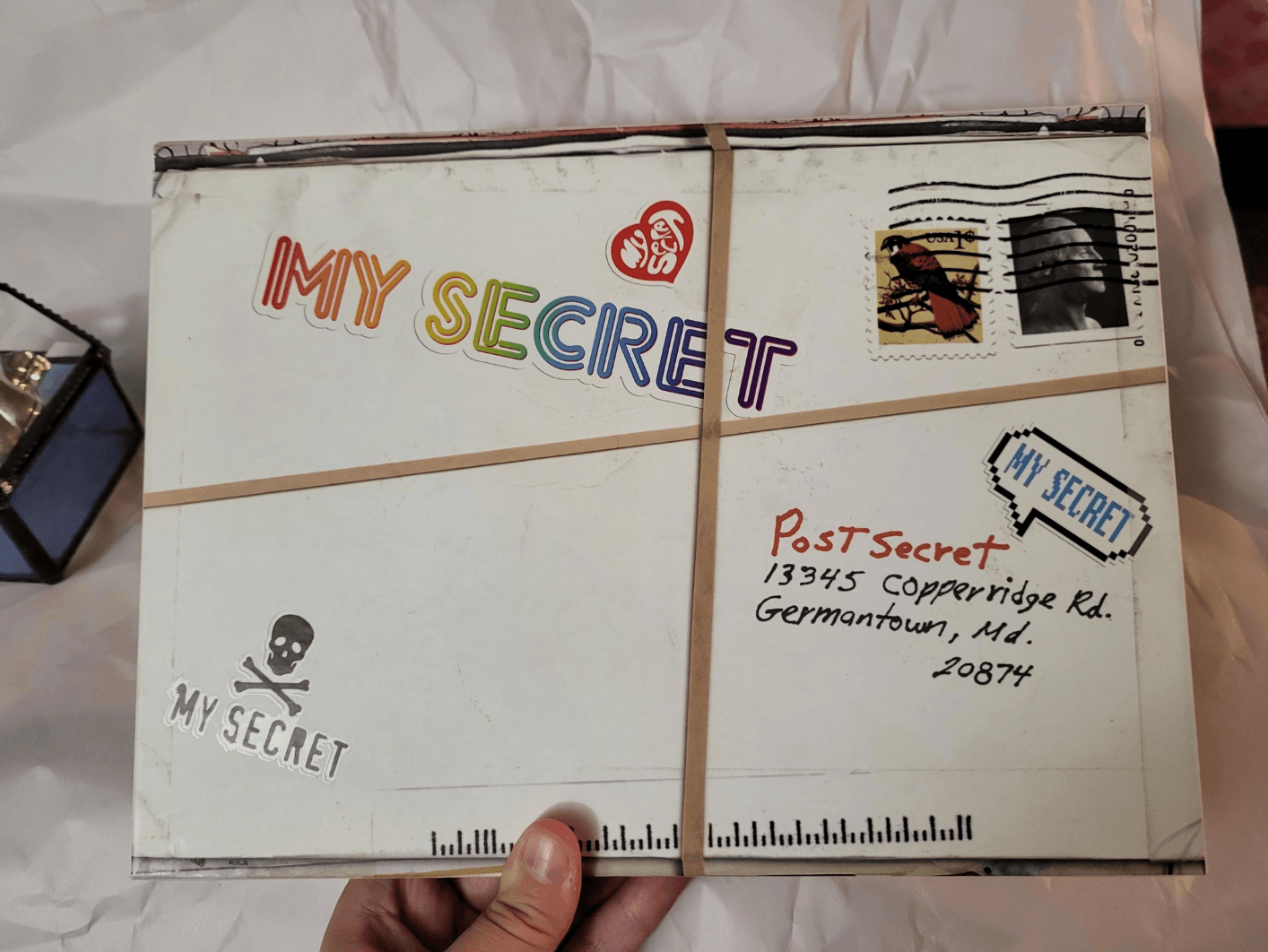
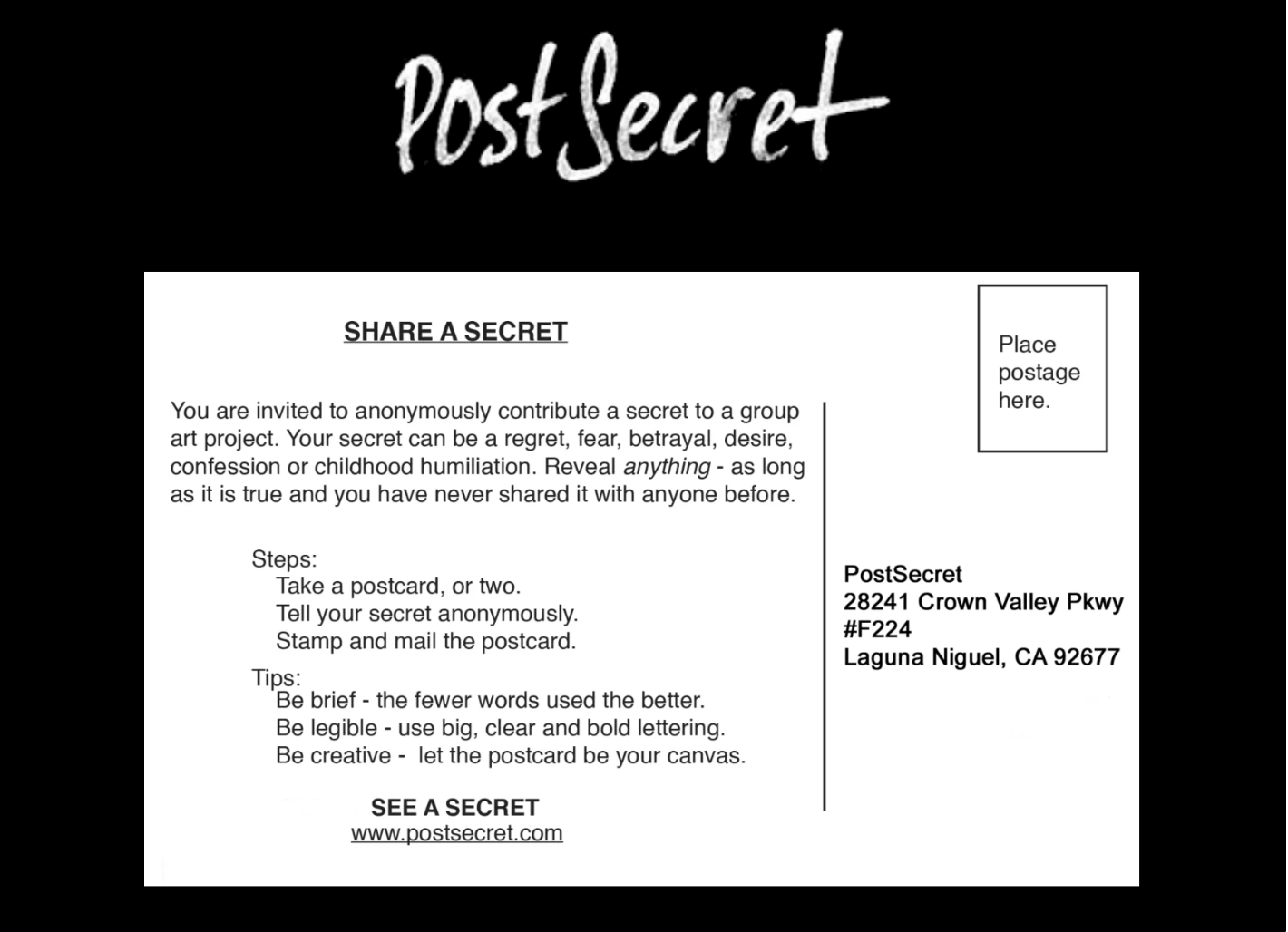
The site remains a simple system: a prompt to share your thoughts and an address to share send your postcard to.
In that sense, it has stayed closer to its origin than most things that achieve that level of reach. It never fully became a platform, even as it reached an audience comparable to one. It never required people to build an identity, even as it collected more than a million contributions. It simply created a place where something usually kept private could exist briefly in public, without being tied to a name.
And for a certain kind of thought, that was enough.
Share this post: