FFFFOUND!: The Invite-Only Site That Shaped Internet Aesthetics (Before Pinterest Won)
In 2007, a small Japanese design studio built a website that most people had never heard of and almost nobody could get into. The ones who did get in didn't talk about it much. They just used it, every single day, and quietly credited it for some of their best work.
The site was called FFFFOUND!, and for nearly a decade it was the closest thing the design world had to a shared brain.
The concept was simple: save images you find on the internet, and let an algorithm surface more visuals based on your taste and the taste of people who like similar things. The feeds lived at ffffound.com and, just like any great algorithm, always knew what you were looking for before you did. If you wanted to use the platform, you needed an invite from someone who was already using it, and invites were scarce and exclusive.
Each member only ever got one invite to give.
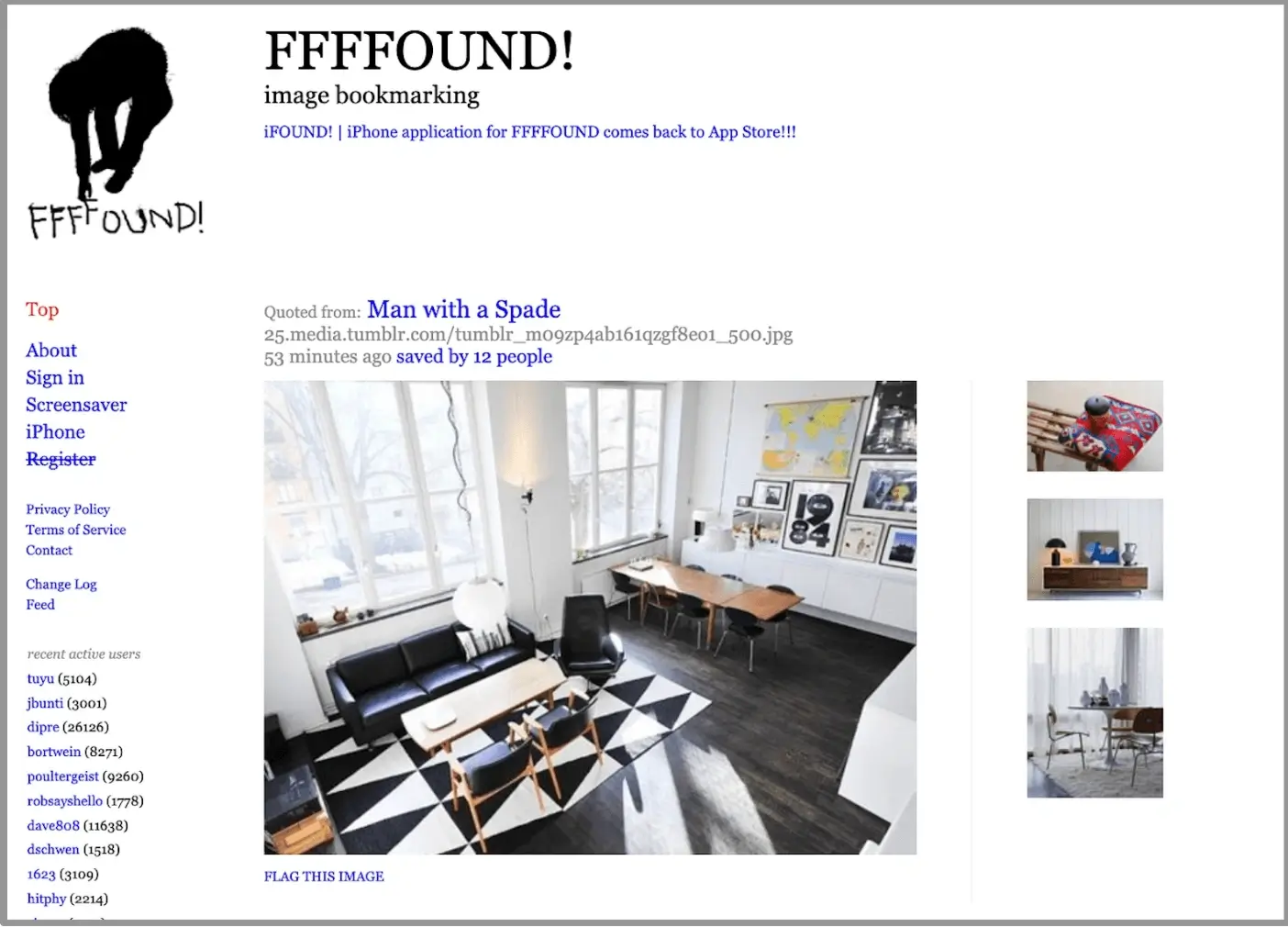
That constraint was the whole product. Since the only way to join FFFFOUND! was through someone who already had good taste, the community remained high quality and full of “creatives,” with a blend of art directors, photographers, brand designers, and fashion editors, amongst others. These members spent their careers trying to see what was “next” before it arrived, and FFFFOUND! was where they went to get inspiration.
By the end of its second year, FFFFOUND! was hosting over 500,000 images. The visuals that circulated through it often included high contrast photography, raw typographic work, and editorial imagery that felt more like a magazine than a social platform, and the aesthetics on the platform shaped creative culture in ways most people couldn't trace back to the source. You'd see something on a billboard or in a lookbook and not realize it had been percolating on FFFFOUND! two years earlier. That was how far ahead it ran.
The Mechanic That Made It
The invitation model is worth understanding on its own terms, because it wasn't a clever marketing trick or a scarcity play. It was a genuine design decision about what kind of community the site wanted to be.
One invite per person meant the network grew slowly and deliberately. Every new member was effectively vouched for by someone already inside. The content remained high quality because the people curating it set a high bar for was worthy of making it on the platform. There was no growth hack that could shortcut that. The site didn’t change much from it’s initial inception, and remained like that for years. It was stable, curated, a little insular, and genuinely influential in a way that very few platforms ever manage to be.
Pinterest Showed Up Two Years Later and Ate Its Lunch
When Pinterest launched in 2009, the core mechanic of the platform was nearly identical to FFFFOUND!: save images, organize them, and discover new things based on shared taste. The differences were in the details. Pinterest was open to everyone, optimized for growth, and built for a consumer audience rather than a professional creative one. Within a few years Pinterest had tens of millions of users, and eventually went public at a valuation north of $15 billion.
FFFFOUND! had the same idea two years earlier and never scaled past a small, invite-only community. That gap is worth sitting with, because it gets at something that startup culture tends to gloss over: the idea is rarely the thing that matters most. It’s all about finding fit + scale.
Think about Webvan. They launched in 1999 with a genuinely good idea. People could order groceries online, and get them delivered to their door. The company raised hundreds of millions of dollars, built warehouses, hired staff, and ended up going bankrupt in 2001. The concept wasn't wrong, but the timing was off for when the market was ready for what they were building. Broadband wasn't widespread, smartphones didn't exist, and consumer trust in online commerce was still fragile. When Instacart launched in 2012, the iPhone had been in people's pockets for five years, and the same basic idea became a multi-billion dollar business almost immediately.
FFFFOUND! was Webvan. Pinterest was Instacart.
By 2009, something had shifted. Broadband was everywhere, smartphones were changing how people thought about the internet, and consumer networks were growing exponentially through growth hacking. The idea of curating your visual identity online (saving what you love, and sharing what inspires you), had started to feel natural to a much broader audience than the designers and art directors who built FFFFOUND!'s initial community. The market was finally ready for what FFFFOUND! had been doing all along. Pinterest saw it and scaled it. FFFFOUND! kept doing what it had always done as a small and curated platform.
There's nothing wrong with that choice, but it does have limitations for growth potential. FFFFOUND! was built by a design studio as a tool, not a venture-backed startup chasing a market. But it does illustrate why timing gets talked about so much in the startup world. You can have real insight, real execution, a product people genuinely love, and still watch someone else build the billion-dollar version of your idea simply because they showed up when the conditions were right.
The Quiet Exit
In April 2017, Yugo Nakamura announced on Twitter that FFFFOUND! would be shutting down the following month. There was no detailed explanation, acqui-hire, or acquirer waiting in the wings, and users were left a bit perplexed by the brief announcement and a closing date for the site.
What followed was where the story got harder. FFFFOUND! offered no export tools. Users had no way to download their saved images, or to create an archive of the work they'd spent years curating. The site had also blocked the Internet Archive from crawling it, which meant there would be no Wayback Machine record to fall back on. A decade of one of the internet's most carefully curated visual libraries simply disappeared. The only real remnants or ffffound today is a dated Instagram account (with about 7,000 followers) which showcases some of the previously curated work on the platform.
What It Actually Teaches Us
FFFFOUND! is a useful story to sit with if you're thinking about why some ideas become successful companies and others become footnotes.
The mythology around startups tends to focus on vision and execution, and both matter. But market timing might matter more than either. If you build a company before certain infrastructure exists, before consumer behavior shifts, or before the tailwinds boost you along, even a genuinely great product can end up as a reference point for whoever comes next.
Pinterest became a $15 billion public company, and FFFFOUND! became a parking page. Both of them had essentially the same idea, but only one of them had the timing.
Snagged is a domain acquisition and brokerage firm. If you're curious about the story behind a domain or need help acquiring one, we'd love to talk.
Share this post: